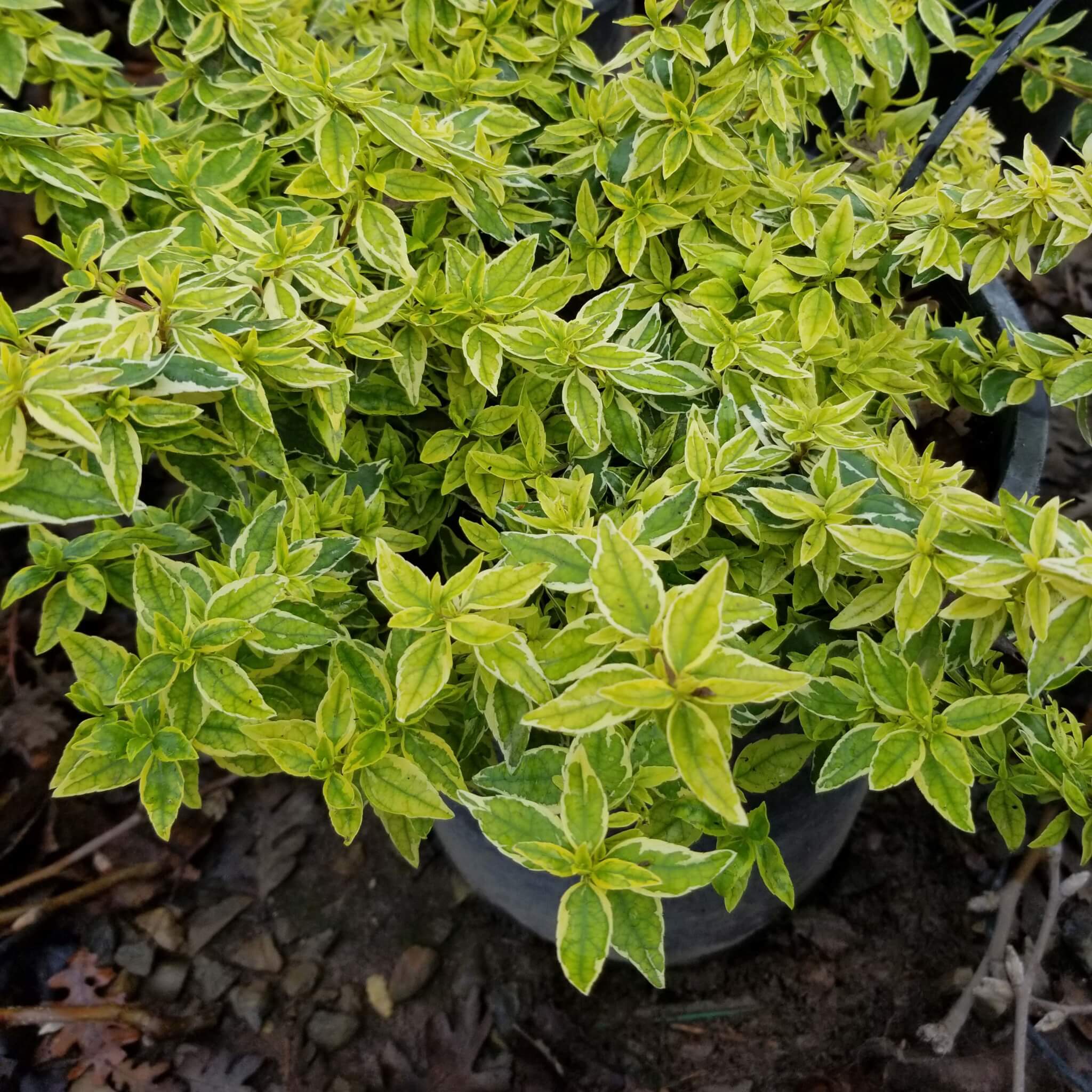
Known for its dramatic foliage, Abelia x grandiflora ‘Radiance’ PP#21,929 boasts small variegated green leaves. As a moderate grower Radiance Abelia, has a rounded growth habit with an average landscape size of 3-4 feet tall by 3-4 feet wide. You can expect little white fragrant flowers to bloom summer through fall making it an exceptionally long blooming season from repeat flowering.
Origins And Landscape Adaptability
Native to eastern China, this variet known for its low maintenance qualities as well as the ease in which it adapts to various landscape types. Thriving in USDA zones 6-9, makes this plant an excellent choice for California landscapes from coast to valley.
Planting & Care Instructions
Sunlight: Radiance Abelia performs best in part shade, which enhances its variegated foliage color. It tolerates full sun but may show reduced color vibrancy in intense afternoon heat, particularly relevant for inland California climates like the Sacramento area.
Watering: Water regularly during the first growing season to help its root system to establish and aim for deep watering 2–3 times per week until. Once established, Radiance Abelia is moderately drought tolerant and typically requires watering once per week during hot summer months in California.
Soil: Plant in acidic, well-drained soil. Amend heavy clay soils with compost before planting to improve drainage. A soil pH of 5.5–6.5 is ideal.
Fertilizing: Apply a balanced, slow-release fertilizer in early spring to encourage new growth and flowering. Avoid over-fertilizing, which can reduce bloom production.
Pruning: Radiance Abelia is low maintenance but benefits from light pruning in late winter (January–February in California) to maintain its rounded shape and encourage fresh growth. Remove any dead or crossing branches at this time. Avoid heavy pruning, which can reduce summer flowering.
USDA Hardiness Zones: 6–9
Climate Suitability: Thrives in California’s Bay Area (Zone 9b–10a) and Sacramento Valley (Zone 9b). Tolerates heat and mild frost.
Pollinators: The white tubular flowers attract hummingbirds, bees, and butterflies, making this an excellent choice for pollinator-friendly gardens.
Landscape design ideas
A striking plant known for its color variation and compact size, Radiance Abelia can be mass planted or planted on its own in a container. To add different colors and textures to your landscape design consider grouping this plant in a landscape bed with Hemerocallis yellow, Loropetalum rubrum or Heuchera.
FAQ -Frequently Asked Questions About Radiance Abelia
How big does it grow?
Radiance Abelia reaches an average mature landscape size of 3–4 feet tall and 3–4 feet wide. It has a moderate growth rate and a naturally rounded, compact habit that requires minimal pruning to maintain its shape.
When does it bloom?
It blooms from summer through fall, typically from June through October in California. This makes it one of the longer-blooming shrubs available, providing months of small, fragrant white flowers.
Is Radiance Abelia drought tolerant?
Once established,usually after the first full growing season, it is moderately drought tolerant. During establishment, regular watering is important. In California’s hot inland climates, weekly deep watering during summer is recommended even for established plants.
Can I grow it in a pot or container?
Yes, it is well-suited to container gardening. Choose a container at least 14–16 inches in diameter with good drainage holes. Container plants may need more frequent watering than in-ground plants, especially during summer.
Is Radiance Abelia deer resistant?
Radiance Abelia has moderate deer resistance. It is not a preferred food source for deer, but in areas with high deer pressure, protective measures may still be needed for young plants.
What plants grow well with Radiance Abelia?
It pairs beautifully with plants that complement its variegated green and white foliage. Good companions include yellow Hemerocallis (daylily) for color contrast, Loropetalum rubrum for deep burgundy tones, and Heuchera for ground-level texture. These combinations create layered, year-round interest in a landscape bed.
Is it evergreen?
Yes, it is evergreen and retains its variegated foliage year-round in mild climates like California’s Bay Area and Central Valley. In colder zones (6–7), it may be semi-evergreen, dropping some leaves in winter.