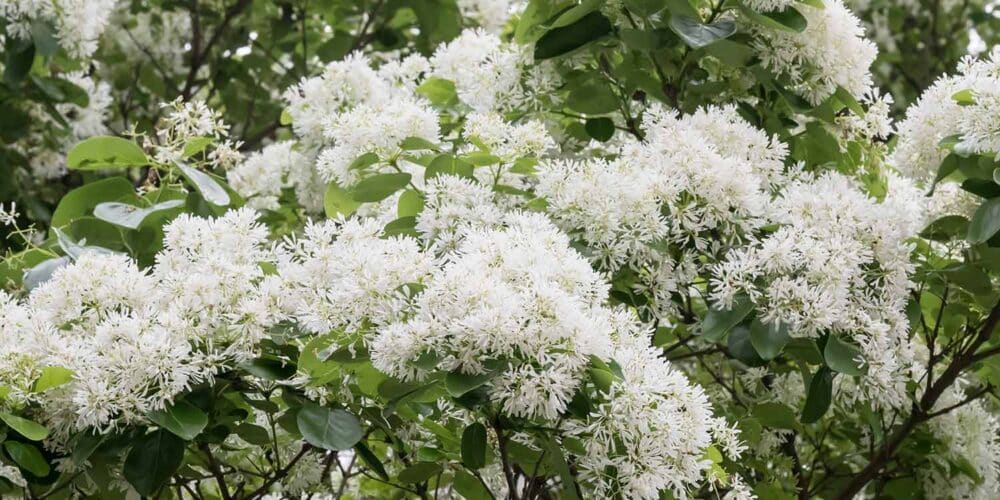
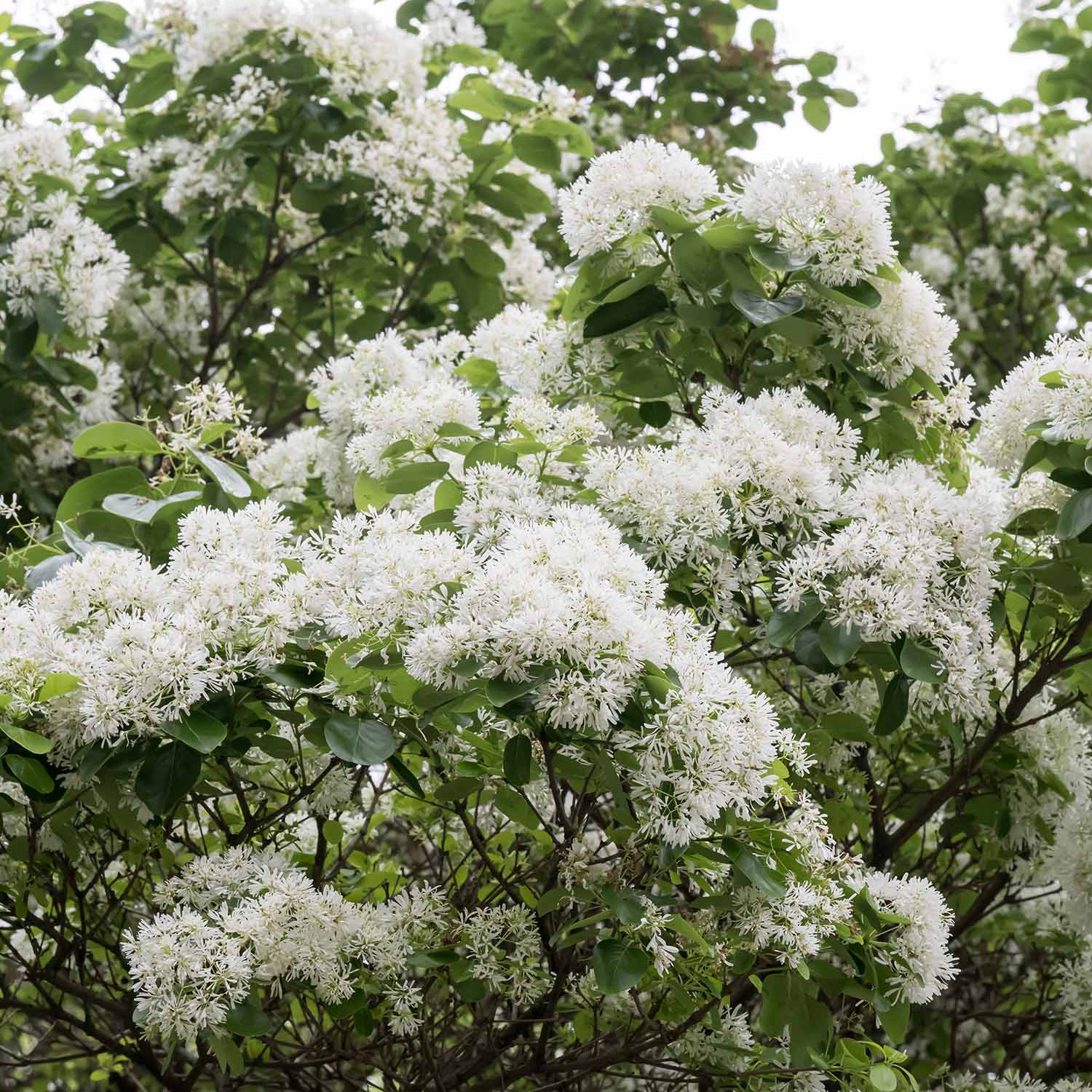
Chionanthus retusus (Chinese Fringe Tree) is one of the best small deciduous trees for California gardens. A slow-growing, dome-shaped tree that reaches 15–20 feet tall and wide, producing magnificent clusters of sweetly fragrant, fringe-like white flowers every spring before the leaves fully emerge. Highly prized by California landscape designers for its multi-season interest, adaptability to a wide range of soils, and exceptional tolerance of urban conditions, the Chinese Fringe Tree is an outstanding specimen for small yards, mixed borders, and streetscapes across California’s Bay Area and Sacramento Valley. Rated for USDA Hardiness Zones 5–9 and Sunset Climate Zones 3–9 and 14–24, it thrives across nearly every California growing region.
Origins And Landscape Adaptability
Native to China, Korea, Japan, and Taiwan, Chionanthus retusus has been cultivated in gardens across eastern Asia for centuries and was introduced to Western horticulture in the mid-1800s by plant explorer Robert Fortune, who collected specimens near Fuzhou, China. The genus name Chionanthus comes from the Greek words chion, meaning snow, and anthos, meaning flower. A direct reference to the cloud-like white blooms that cover the bare branches each spring. The species epithet retusus means “notched” or “blunt,” referring to the rounded, slightly indented leaf tip. In China, the young leaves have historically been used as a substitute for tea.
Thrives across California’s diverse climate zones. Rated for USDA Zones 5–9 and all California Sunset Climate Zones (3–9, 14–24), making it one of the most broadly adaptable ornamental trees available for California landscapes. Tolerates urban pollution, making it a strong candidate for street tree and parkway plantings across the state.
Planting And Care Instructions
Sunlight: Chinese Fringe Tree performs best in full sun exposure, which produces the heaviest and most reliable bloom each spring. Partial shade is tolerated and produces the best-looking foliage, but reduces flowering. For California gardens, full sun is recommended.
Watering: Water regularly after planting to establish healthy root system during the first growing season. Once established, reduce frequency. The Chinese Fringe Tree is moderately drought tolerant but benefits from deep irrigation during California’s dry summer months, particularly in hot inland valleys. Water deeply once every 2–3 weeks from May through October for best performance. Avoid prolonged drought once established, as this can stress the tree and reduce flowering the following spring.
Soil: Highly adaptable to a wide range of soil types, including clay, loam, and sandy soils, provided drainage is adequate. Performs best in fertile, moist, well-drained soil with a slightly acidic to neutral pH.
Fertilizing: Feed with a general purpose fertilizer before new growth begins in spring. Established trees in good soils require minimal supplemental feeding. A light application of a balanced, slow-release fertilizer in early spring is sufficient to support healthy growth and flowering.
Pruning: Prune only after flowering in late spring to avoid removing the current season’s blooms. This tree requires minimal pruning so take care to remove only crossing, dead, or damaged branches. It can be grown as a single-trunk specimen tree or left as a natural multi-stemmed large shrub. Avoid heavy pruning, which can disrupt the tree’s naturally graceful branching structure.
USDA Hardiness Zones: Rated for USDA Zones 5–9 and California Sunset Climate Zones 3–9 and 14–24. Hardy to well below freezing, making it reliably cold-tolerant across all California growing regions, including the Central Valley and foothill areas that experience frost.
Pollinators: The fragrant spring flowers attract bees, beneficial insects, and butterflies. Female trees produce small, dark navy-blue, olive-like berries in fall that are eagerly eaten by birds, adding wildlife value through multiple seasons.
Landscape Design Ideas
Simplify maintenance by planting Chionanthus retusus as a standalone specimen where its spectacular spring bloom can be fully appreciated. A spatially challenged front yard, a prominent corner of the garden, or a courtyard setting where the fragrant flowers can be enjoyed up close. A great choice for small-yard landscapes, water-wise California gardens, and any planting where a four-season tree is needed without the scale of a large shade tree. Plant alongside high-profile perennials like Salvia ‘Greggii Purple’ or ornamental grasses for a bold mixed border composition that carries interest from spring through fall color.
FAQ — Frequently Asked Questions About Chionanthus retusus
How big does a Chinese Fringe Tree grow?
Chionanthus retusus typically reaches 15–20 feet tall and 15–20 feet wide at maturity. It has a slow growth rate, a dome-shaped to rounded crown, and is often grown as a multi-stemmed tree. Under ideal conditions it can live 70 years or more, making it a long-term investment in any garden.
When does Chionanthus retusus bloom?
Chinese Fringe Tree blooms in spring, typically from March through April in most California gardens. The fragrant, cloud-like clusters of narrow white flower petals emerge just as the leaves begin to e,erge or on bare branches just before leaf-out creating one of the most dramatic spring displays of any small tree. The bloom period lasts approximately 2–3 weeks.
Is the Chinese Fringe Tree drought tolerant?
Once established after its first 1–2 growing seasons, Chionanthus retusus is moderately drought tolerant. It performs best with deep irrigation every 2–3 weeks during California’s dry summer months. The Sacramento Tree Foundation lists it as a water-wise tree for California landscapes. Avoid prolonged drought, which can stress the tree and reduce the following spring’s flowering.
What are the best climate zones for Chionanthus retusus?
Chinese Fringe Tree is rated for USDA Hardiness Zones 5–9 and California Sunset Climate Zones 3–9 and 14–24.
Does Chinese Fringe Tree have fall color?
Yes. Chionanthus retusus offers excellent multi-season interest. After its spring bloom, the glossy dark green foliage holds through summer and turns a rich golden yellow in fall. Female trees also produce small, dark navy-blue, olive-like berries in fall that persist into winter and attract birds. The peeling, cinnamon-toned bark provides additional winter interest when the tree is bare.
Is Chionanthus retusus a deer deterrent?
Chionanthus retusus is not considered a great deer deterrent and may be bothered in areas with significant deer presence. In foothill and rural California communities with active deer populations, protective fencing during the establishment period is recommended.
What plants grow well with Chionanthus retusus?
Chinese Fringe Tree pairs beautifully with vibrantly colored perennials that complement its white spring bloom and golden fall color.
Is it evergreen?
No. Chionanthus retusus is deciduous, dropping its leaves in winter.